
Neural circuits for smell
Sensory perception is the mechanism through which we engage with the rich tapestry of physical sensations, sights, sounds, tastes, and scents that shape our reality. Remarkably, though, perception is not fixed. Instead, it is exquisitely adaptable, influenced by our expectations, internal states, and past encounters. This intriguing flexibility is a hallmark of sensory circuits which enables them to dynamically respond to changing circumstances, and it relies on the innate adaptability of neurons, circuit-level modulation, and higher-order, top-down neural feedback. While this flexibility is adaptive, it means that perception offers an unreliable representation of the state of the world inside and around us. Optical and auditory illusions, the persistence of chronic pain, habituation, sensitization, and the effects of selective attention are examples of how our perception can be distorted, and, at the same time, they provide insight into how neural circuits process sensory information in the first place.

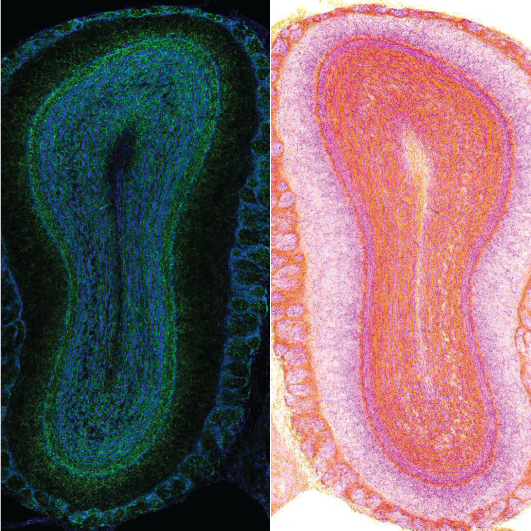
How do neural circuits transform sensory information?
The Moss Lab is dedicated to unraveling how neural circuits transform sensory data in diverse contexts, giving rise to a range of perceptual experiences that drive contextually-appropriate behavior. To explore these phenomena, we employ the mouse olfactory system as a powerful model, allowing us to map out the function of specific neural circuits from sensory input to behavioral output.
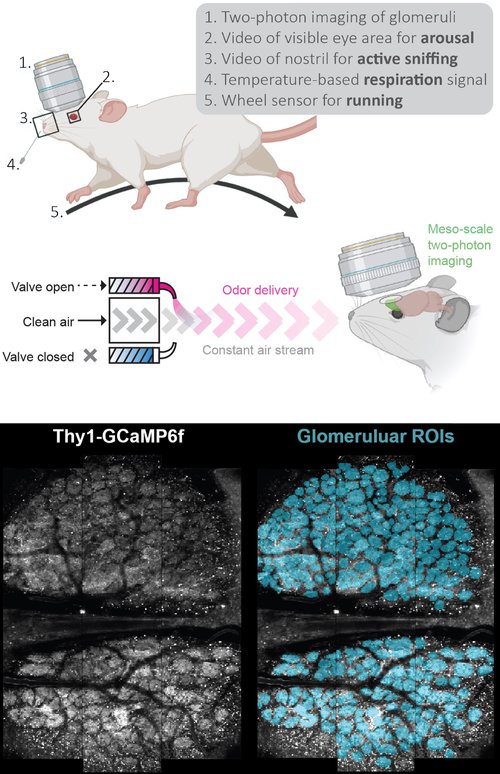
Our approach
We use a sophisticated arsenal of viral and genetic manipulations, in vivo imaging, electrophysiology, and behavior to ask:
- How do emergent properties of simple circuits enhance our ability to distinguish between different odors?
- What is the role of neuromodulation in controlling the flow of sensory information from the nose to the brain?
- How are memories of odors maintained in circuit activity long after odors have dissipated?
Ongoing investigations…

Odor coding in the olfactory bulb
The brain isn’t a simple on/off machine. Neurons don’t just fire like switches. They whisper, nudge, and sometimes act unpredictably. This “messiness” may be what makes the brain so flexible, letting us interpret ambiguous inputs, adapt to new situations, and generate rich perceptions. The olfactory system, with its blend of reliability and randomness, is a powerful model to study these processes. By probing how smell is encoded, we aim to uncover the rules of probabilistic brain computation—and why changes here may foreshadow cognitive decline in aging and disease.

Olfactory bulb local computations
Smell works in ways the rest of the brain doesn’t. Instead of signals flowing neatly from one end of a neuron to the other, olfactory cells use unusual tricks—like releasing dopamine and GABA straight from their dendrites. We’re developing new imaging tools to watch tiny electrical sparks and chemical release in real time. By uncovering how these local signals shape smell, we aim to reveal why olfaction is tied to memory, behavior, and even early signs of brain disease.

State and context dependent regulation of olfactory processing
Olfactory perception, odor-guided decision-making, and behavior are influenced by changes in the external environment (e.g., shifting background odors or the appearance of a predator) and the internal environment (e.g., hunger or attention). Determining how context and state-dependent neurotransmission sculpt olfactory information processing is critical for understanding how sensory input drives adaptive behavior.
 Moss Lab @ OHSU